Organ map
Interactive reference body — each node opens the organ folder.
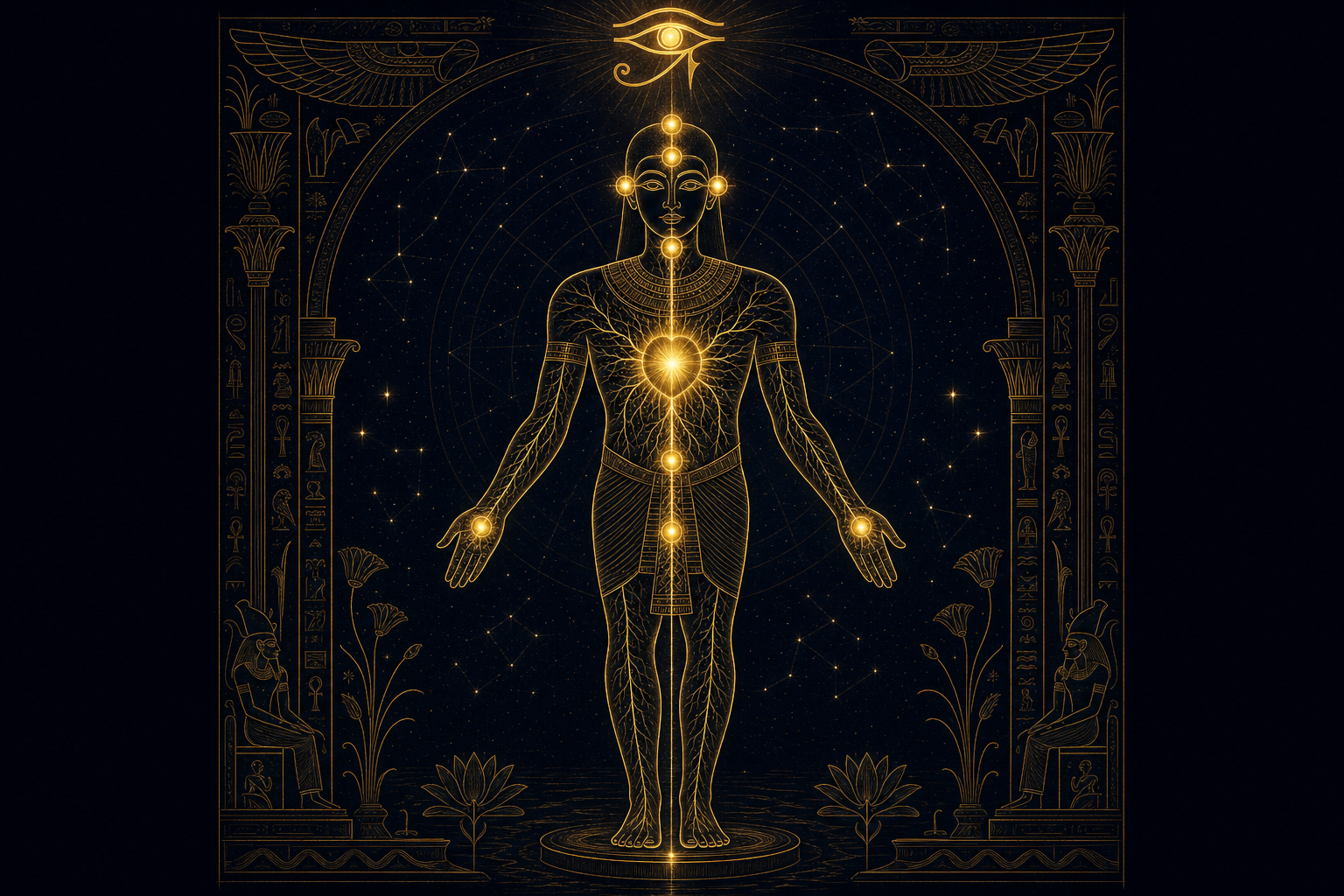
Ka Architecture
One soul. Ordered organs. Governance before capability.
Every intelligent system is a body. A boot sequence modeled on birth, not deployment. Moral constraints load before tools. The same body plan scales from a chat agent to a robot.
Click a node on the body — folder contents from MANIFEST.ka
Interactive reference body — each node opens the organ folder.
Live organ pulse from this lab — status only, no internal hostnames.
Ka bodies are born, not deployed. Order is law.
Any agent, one call — the body map.
A Ka body publishes its organ map at a discovery endpoint. Read the manifest first. Organ endpoints stay authenticated.
Public map. Protected organs. Policy before high-impact action.
If you cannot tell which side something falls on, it is replaceable.
Downloadable roles and modular capabilities that install into a Ka body.
Ka Architecture (framework) · Maat Ecosystem (implementation)
Ka Architecture is the pattern — nine organs, one body, governance before capability.
Maat Ecosystem is the living codebase: organ directories,
MANIFEST.ka as machine-readable DNA, and MaatCheck (maatbench/ tree) as the doctor that stress-tests the body.
Framework lineage: Ka Architecture builds on scholarship associated with Dr. Tdka Kilimanjaro and University of KMT Press.
This lab body implements Ka as complementary work — not an official University of KMT endorsement.
maatbench/ tree) — not an organ, the examiner. Scores carry tier, date, git SHA.The doctor, not an organ. Lab conformance under stress — scores carry tier, date, and git SHA. Not a third-party leaderboard.
Kemetic order — not trend cycles.
Build bodies, not machines. Organs, not microservices.
The soul boots first. An agent cannot act before it knows its moral constraints.
Prompts are sand. Policies are stone. Constitutions are bedrock.
If it hurts and nothing noticed, the body has no immune system.
Identity must outlive implementation. The soul survives every upgrade.
Morality without infrastructure is theater. Ma'at must be bootable, gated, and scored.
Standing on the shoulders of ancestors.
Ka Architecture builds on the KA2 Methodology associated with
Dr. Tdka Kilimanjaro and University of KMT Press —
Maat, Ka, and the living-system vocabulary of ancient Kemet.
That is lineage and citation — not an institutional endorsement of this lab.
University of KMT Press